What's in a name?

My photo
London, United Kingdom
I speak, I listen, I read, I write, I act, I play, I debate, I discuss, I fool, I smile and I sulk.
Showing posts with label Theatre. Show all posts

Tuesday, 19 July 2011

Parting is such sweet sorrow

"The time has come," the Walrus said,
"To talk of many things:
Of shoes and ships and sealing-wax.
Of cabbages and kings
And why the sea is boiling hot
And whether pigs have wings."


This is the end of An Actor's Journal as we know it. In fact, this is the end of my blogging project as I know it. I never say never, but for now I've decided to draw a definite line under everything. Considering I haven't written anything for nearly three months, this probably comes as no surprise, but I thought it fair to at least say a proper goodbye.

There aren't many reasons for this. I simply haven't the time, energy, authority or inclination to maintain a blog about acting or being an actor. Many experienced and successful directors and practitioners from Konstantin Stanislavsky and Bertolt Brecht to Declan Donnellan and Mike Alfreds have stressed that acting by its very nature is a process of doing first and foremost. Anything else - be that writing, discussing, eulogising etc - is just circumambulation or, as one of my teachers at drama school may endearingly put it, "bollocks". Over the past ten months I have been inspired, exhausted, terrified, relaxed, confirmed and sensitised to the fact that I have a very long way to go before I have enough experience or insight to even consider acting, let alone writing about it for a readership. Who do I think I am! My primary concern right now should be the process of acting and not any results, reception or reflection which may spring from it. I see that so clearly, now, that it's a wonder I had the gall to assume a blog on it in the first place.

Another fairly obvious reason is that, because of my training, I can't fully focus on both the day-to-day experience of training and the activity of recording it for posterity. As the saying goes, one cannot be a slave for two masters, and I know where my true allegiance lies. I enjoy the training so much I often feel too overwhelemed at the end of the week to even keep a comprehensive record of my own notes, let alone condense, edit and reshape them for a wider audience. There is a reason why training can often seem so elusive and private. That is because it is. Beyond the basic craft of vocal and physical ability to sustain a performance, the essence of acting exists outside of both objectivity and the capabilities of language. The experience is so much more profound, that I envy those who can even remotely describe it as recognisable to others. I'm not describing some form of magic, either. Try and accurately describe love, fear, grief, rage, or any other stong and deep emotion and you face the same problem. Drama, the theatre, acting, whatever you want to call it, is borne out of those emotions and includes an uncanny bond between the actors and audience. The effort of writing about this phenomenon is simply too great for my pretty little head.

Finally - and this is a question I ought to have asked myself long ago - who gives a damn? The majority of readers of this blog were kind enough to continue after an earlier blog I wrote. How many of these people actually want to read this stuff? It's a bit of a niche market, and though we all watch plays, films or television, few of us care enough to talk about it in detail. Those who have the spirit and the knowledge do a better job than I do, so why step on their toes? I'm not trying to be humble, I just know that I cannot devote as much time to this kind of work as many others do. My heart isn't really in the blog, though my enthusiasm for the work at school and future career has only increased.

So there you have it. I'm too lazy to maintain a blog, and not enough people I know necessarily need to read my opinions or even care about such matters. The only respectable option was to make a dignified exit. It has been fun, though, and I'm very grateful to all and any who stumbled across these pages and found something useful to take with them. As I've already said, I can't claim to never return; but for the forseeable future this is, as they say, it.

Thank you and goodbye!

Sunday, 24 April 2011

In Their Own Words

I don't really like productions in which the audience is told what to think and what to feel. It's very difficult not to be tempted to direct their feelings - but all you've got to do is direct their attention - to say "look at this". I think that's what audience participation is. They are the editors, they are the judges. It's not like a movie where everything is decided. The audience can look where they want. That is why it's important that wherever they look, there should be extremely detailed life.

All I have to do as an actor is believe in what I'm saying at the moment I say it. I have to make decisions. Am I pretending? Am I lying? Do I really believe it? Do I feel it? How important is it that I get the other person to understand what I'm saying? Are they likely to? All those things. It's not up to me whether the character would have been better off if he had or hadn't said that. It's not up to me to say: is he foolish to say that? He just does say it.

Sir Ian McKellen, British Actor, born 1939

Sunday, 3 April 2011

The Magic Space

Making Something out of Nothing: Actors and the Audience

Theatre is an ancient art; it has existed in various forms in every culture across the globe. It is part of what makes us human, and as with many other elements of human existence it is very difficult to define. One simple yet by no means complete way could be to describe it as the experience of one group of people watching another group inhabiting a space out of which Something is created from Nothing. Often very recognisable stories are played out and – as many have noted through the ages – a mirror is held up to nature. Theatre shows us as we are and what we think we know, albeit in a heightened and often abstracted manner. To have the desire to stand in a space and discover what constitutes the core of humanity certainly requires a huge amount of confidence and bravery, but the space is still empty; rarely will an actor truly know what will happen when he steps across that silver thread and into a world created solely through the imaginative process.

During the first year of my training, classes go back to basics, as it were, by simply looking at what one of my teachers calls the strands which make up the carpet; the elements which make up our understanding of Theatre. Each week we explore first what an empty space is or can be. Then how it can be defined by an actor through technical application, such as the use of the actor’s voice and body, and how space between more than one actor can “read” to a viewer. This enables us to create a variety of worlds. One can travel from deserts and plains to mountaintops and cliff faces. One can be awaiting a boat at a harbour or scouring a forest for signs of life; lost at sea to being cramped in a small prison cell; all through simply being in the space. One can be prince or thief; god or mortal; human or animal. We can tell fairy tales and invent dreams. There is no need of costume other than our neutral items of clothing; nor any use of props or miming objects. It isn’t even necessary to use recognisable language. Communication works primarily through sharing space, and the Theatre is all about this.

Eventually, we were permitted to experiment with a prop, but the prop could only be used in a way other than that which it appeared to be made for. For instance, a boot would become a games console; a scarf could become iron chains; a wicker basket could become an oversized phallus.

“Why bother with this?” one may ask. “What has it really to do with the theatre or acting?” It is true that one can feel lost at first, but once you clear away all previous associations with your own perceptions of theatre and get used to the power of experimentation will the answers come. What is acting if not make-believe? Watching someone use a shoe as a toothbrush and recognising it as a toothbrush is infinitely more interesting than watching someone just brush their teeth. Seeing someone lost on a raft when sat on a bare stage can be more compelling than footage of the same thing happening. Watching people transform into monstrous creatures behind someone’s back is more frightening than any CGI animation. Why: because the audience are invited to imagine all of this along with the actors. They need to recognise the toothbrush, the sea and the monsters through their imagination. They can’t and won’t do it if the actor decides not to share, and who can blame an audience for not responding to an actor who refuses to play with them? No-one will pay to watch a bunch of people enjoying themselves for their own sake.

We are all imaginative creatures, but most of us have chosen lives which insist we use our imagination practically. This is honourable and the actor should have total respect for such a life. It is an actor’s job, however, to use his or her imagination to share with those who are sat watching. Just as a mechanic will be excited to explain the workings of an engine to you if you are really interested, an actor ought to relish the prospect of sharing his mind, his body, and his soul with those who have taken the time and energy – as well as spent the money – to be interested in what you have to offer. They expect something from nothing, and they are absolutely right to do so. The Theatre is a Magic Space.

Further Reading: The Empty Space, Peter Brook (Penguin)

Thursday, 13 January 2011

Turning Point


In the first week of Drama School we were asked to think about a particular experience of watching a film or play which made us realise that we wanted to act, or which made us more aware of our desire. The piece could be about any point in our lives, but the only stipulation was that we were watching the work and not acting in it ourselves. It didn’t take me long to think of my Turning Point, and I thought I’d share it with you in a slightly edited version.

While I was studying for my GCSEs, I would bunk off from PE class on Thursday morning to go to the National Theatre at 7am and queue for day seats. It was the only opportunity for me to go to the theatre and see a play. I could never afford the advertised prices and no one in my family was remotely interested in culture or the arts to encourage me. At school, I had already built up a reputation of being someone with “talent” insofar as a fifteen-year-old schoolboy could be, and although this was a useful tool to prevent being bullied, I was still lonely and had few close friends. I hated PE because I was never any good at sports, and was just generally a lazy person. So I would bunk off the classes and found that going to the theatre had a double reward of getting out of school and having something to look forward to in the evening.

On one of these occasions, I queued for Martin McDonagh’s The Pillowman, with the intention of taking a friend. I had never heard of McDonagh before, or of any of his plays. All I knew about this one was that it was new writing and the short description written in the season brochure: “a fiction writer living in a police state is interrogated about the gruesome content of his short stories, and their similarities to a number of bizarre child murders occurring in his town.” I was also intrigued by the cast: Jim Broadbent, David Tennant, Nigel Lindsay and Adam Godley. I knew of the former two actors, but I was most interested in seeing something which had had very little prior exposure. For me at that time new writing was an adventure, an experiment with less certainty and far more risk; like a safer and more exciting form of gambling. On this occasion, the bet paid off.

The play was an incredible experience. For two hours, I completely forgot about myself and was sucked into the world of the play. The production was stunning both visually and conceptually, the text seemed flawless, and the performances from each member of the cast were superb. In later years, I would be proud to boast of having seen and known of David Tennant’s talent long before the majority of the country knew him in Doctor Who. At times the play was a mystery thriller; at times a comedy; at times it was meta-theatrical; and at times it was intensely tragic. I recently described the experience as feeling as though a large hand had burst from the stage and grabbed me by the neck, dragging me from one emotional experience to another. The play dealt with some extremely dark themes and ideas, but it was done in such a way as to make me feel both safe and sickened at the same time. I had never before had a viewing experience like it.

Ever since my first visit to the theatre, I knew I wanted to be a stage actor. There was never any question of doing anything else. At times, however, I found it difficult to see the theatre as anything other than a place to escape the mundanity of normal life, an extra-curricular pursuit which some people were lucky or enterprising enough to make money from. I never saw it as a real, living, organic and dangerous place which had the ability to really capture people. I had never been made conscious of its impact before seeing The Pillowman. It was a turning point not simply for intensifying my desire to act, but it also made me aware of how dark the human experience could be and to recognise that every aspect of our existence could be used for theatrical exploration. I began to see the world very differently. It may sound odd in words, but after watching the play I felt more conscious of being alive. Over the years I’ve come to believe that life is theatre and that theatre is the expression of human experience. In hindsight, I think that going to watch this play was the seeding of this belief.

Monday, 3 January 2011

In Their Own Words

It was at the [Liverpool Everyman Theatre] in the late Sixties and early Seventies that I realised there was a logic to being an actor. That it wasn't just farting about. The policy at that time was to do things that were only to do with the community in which it was based. So if you were doing King Lear, or whatever, you'd do it in such a way that it was relative to a building site in Liverpool. I followed the miners' strike; I followed the Guildford Four. After reading Gerry Conlon's book I wanted to do the film [In the Name of the Father, with Daniel Day-Lewis] so much that I went to the interview completely in character as Giuseppe and stayed in character all the way through the interview - Belfast accent, old suit from a thrift shop...


I like playing characters that are complex, that are intriguing, that come from leftfield, that do things that are unexpected. I don't like people who just follow one line and that's it – that's why I could never be in a sitcom, I don't think. They're not intriguing enough for me.

Pete Postlethwaite, British Actor, 1946-2011
Read his obituary in The Guardian here

Sunday, 2 January 2011

I Have Been Watching...

If you thought the mammoth post below was long, you ain’t seen nothing yet. In the past few months I’ve barely had any time to read, yet I managed to squeeze that lot in. Most of the time, when not actually rehearsing my own projects, I was at the theatre . So, in the spirit of declaration there now follows a list of art which I have ingested since June of this year.

Welcome to Thebes, Olivier (National Theatre, London), 18/06/10
I was so excited about seeing a play on the Olivier stage after having spent two years away from the National. I was even more excited to learn that this play was to have a predominantly black cast and deal with current political issues in Africa through the not-so-oblique allegory of the Theban tragedies. Unfortunately, the play turned out to be little more than a confused rehash of familiar themes and ideas while seemingly being a vehicle for the National Theatre to cash in on the large amount of pays on in the summer with black and ethnic minority actors in the cast. There were some wonderfully watchable performances by Nikki Amuka-Bird, Chuk Iwuji and David Harewood, but I spent most of the time picking up references only someone with a large amount of knowledge about Greek mythology would get; a cruel irony, considering that most of the audience, comprised of young black people who may or may not frequently visit the theatre, did not get it.


Henry VIII, Shakespeare’s Globe, London 21/06/10
I’d never been to watch a play at the Globe before an opportunity arose to see this production. This is not one of the oft-performed plays, either, so the experience was doubly enriching. Mark Rosenblatt’s production was clever and funny, mixing the pageantry of the play with the darkly political atmospheres surrounding both the events within the play and those surrounding its writing. We are reminded that this is a play written soon after Elizabeth I’s death, and is therefore tailored towards being nostalgic propaganda for the Tudors. However, the machinations of Cardinal Wolsey, played to wobbly-jowled perfection by Ian McNeice are not forgotten, and the characters’ duplicity is cleverly delineated by the inclusion of corridors running along the periphery of the thrust stage as a means of highlighting the differences between the public and private spaces. The cast were brilliant, and the whole production was very enjoyable.

The White Guard, Lyttleton (National Theatre, London), 07/07/10
After the disappointment of Women Beware Women and Welcome to Thebes, this adaptation of Mikhail Bulgakov’s novel was a very welcome relief. The only word I can think of to describe the production is “superb”: superb acting, superb direction, superb lighting and superb technical changes. Special mention has to go to Justine Mitchell, Pip carter, Kevin Doyle, Conleth Hill, and Paul Higgins. For me, this will go down with The Pillowman, The House of Bernarda Alba, and Adrian Lester’s Henry V as one of the best shows I’ve ever seen at the National Theatre.


Henry IV Parts 1 and 2, Shakespeare’s Globe, London, 08/07/10 – 05/09/10
Of the four Shakespeare productions I saw on stage this year, Dominic Dromgoole’s production was without doubt the finest and my favourite. I’ve long been a fan of Allam’s since seeing him in David Harrower’s Blackbird, a few years ago, and my adoration of him has been cemented by taking on Falstaff (a role he was seemingly born to play) and performing it with aplomb. Allam has such presence, the entire audience lights up whenever he is on stage. Of course, he wasn’t the only good thing in it, but he certainly is owed the most amount of praise for this one.

The Beauty Queen of Leenane, The Young Vic, 19/07/10
This play is yet another Martin McDonagh work for which I have nothing but adoration. His gift for the lyricism and rhythm of the rural Irish dialect is unparalleled. In this, the first London revival of the play since its original run in 1996, we are presented with Maureen and her over possessive mother, played finely by Susan Lynch and Rosaleen Linehan, respectively. The main space at The Young Vic is a joy for staging, too, as the use of acetate lining the walls of the auditorium and streaming what was taken to be rainwater down the outside made the audience a part of the physical world of the play. The attention to detail was so gratifying that it was a little disappointing to spot a few moments when the believability was stretched and even broken. One actor in particular seemed to be working on a different beat to the rest of the cast, but the performances were on the whole very enjoyable.


Blood and Gifts, Lyttleton (National Theatre, London), 27/09/10
Political theatre isn’t all Brechtian alienation and verbatim council-flat moaning, y’know. It is possible to set a bog-standard drama in the middle of a particularly relevant political conflict, as J.T Rogers has done with this new piece. Diplomats, politicians, military and religious leaders all juggle their public and private responsibilities in an arena as enchanting and dangerous as Afghanistan during the Soviet occupation in the 1980s. What is most refreshing to watch is the lack of prejudice: there are no good or bad guys, only people reacting according to their personal and political principles. The play presents us with a fresh look at the contemporary history of a fragile state, while examining international relations in a manner which includes rather than alienates the audience. Fast-paced, witty and engaging, this play proved that with a great script, political theatre can successfuly marry education and entertainment.


Hamlet, Olivier (National Theatre, London), 06/10/10
As Derek Jacobi once said, there are as many Hamlets as there are actors to play him: the role - and by extension, the entire play - is as universal and as versatile as they come. Rory Kinnear really had nothing to worry about. Nicholas Hytner’s production has been a commercial and critical success, and the production can pat itself on the back for making the text so clear and accessible, as well as highlighting the political tensions bubbling throughout the play. Though not yet the best version I’ve ever seen at my ridiculously young age, and despite a few weak links in the cast, this was a thoroughly enjoyable show.

Blue/Orange, Arcola Theatre, London, 02/11/10
The question we must always ask ourselves is “Why?” Why revive Joe Penhall’s play about race, mental health and the NHS which left one review in a state of “white hot excitement”? Why convert the cast from an all-male one to an all-female one? Not that the idea wasn’t novel. Having only read the play and taken one monologue as part of my audition portfolio I was certainly keen to see a production of the play, and even more so when reading the twist. However, while watching I couldn’t help noticing just how masculine the language is. Most of the time it wasn’t that prominent, but the scenes of conflict left me feeling more estranged. By the end of the performance, I doubt I was any wiser as to the motives behind the decision to provide an all-female production, but it was gratifying to watch, in any case.

Tribes, Royal Court, London, 06/11/10
After about five minutes, I was prepared to hate this play. Lights up on an average white middle-class privileged family having an argument around the dinner table. So far so Polly Stenham. Yawn: pass the balsamic vinegar and f*@k off. The possibility for clichĆ© and contrivance is so high with these scenarios that the mere suggestion of characters’ guilt, angst or frustration immediately sends me to Sardonic Central Station. However, I was about to be confronted with my own prejudices about what makes for good theatre, as the play was by no means a rehash of same old, same old. The eldest son, Billy, is deaf, and the play became more about him and his experiences as he embarks on a relationship with a woman who was born hearing to a deaf family, and is rapidly losing her own hearing. The play dealt with sense of self, attitudes toward disability and the implications of that all-too-vague term “community”. Though the ending was somewhat easily-resolved, the play raised some interesting questions and left me keen not to judge a play by its poster too much in future.

King Lear, Donmar Warehouse, London, 02/12/10
Snow; Donmar Warehouse; Shakespeare; and Derek Jacobi: and all for free! Christmas certainly came early when I had the opportunity to watch this production’s dress rehearsal the night before previews opened. Unsurprisingly, the only sense of it being a dress rehearsal was the fact that only the circle seating was available for watching it, and the occasional sound of the press photographer snapping away drawing the attention away from the action on stage. Naturally, the majority of the cast was excellent, and composed of well-known performers giving measured and vivid turns. Gina McKee and Justine Mitchell were brilliant as Goneril and Regan, Ron Cook gave a captivating Fool, and Jacobi was superb as Lear. Grandage has done a brilliant job of one of the “great tragedies”, and I would urge anyone to see his production, running until February at the Donmar, then on touring the UK and finishing in Broadway in July. See it if you can!

The Glass Menagerie, Young Vic, London, 20/12/10
I really do love the main space of the Young Vic. It has an amazing ability to seem very intimate despite its fairly large size. Tennessee Williams’ semi-autobiographical play, set in and around the cramped Chicago apartment inhabited by the Wingfield family, looks fantastically intricate in this space, and the two levels of the stage are used very inventively. Deborah Findlay and Sinead Matthews were particularly noteworthy as Amanda, the faded former-Southern Belle-turned abandoned housewife, and Laura, her mildly disabled and extremely shy daughter, the owner of the eponymous collection. Joe Hill-Gibbons follows this year’s earlier success, The Beauty-Queen of Leenane, with a less biting, more bittersweet production which doesn’t fail to draw the parallels between Williams and his protagonist, Tom, played with suitably expressive irritation by Leo Bill. Although not perhaps the most interesting of Williams’ plays, it still stands up as a classic exemplar of his writing, as well as being a part-insight into the writer’s own personal anxieties.

So, that was my theatregoing in the second half of 2010. Mostly highs, a few disappointing lows, and a whole lot of learning and observation along the way. Here's to 2011's theatrical output!

Tuesday, 21 December 2010

I Have Been Reading...

Despite having virtually zero online presence over the last four months, I have been present: a state which I never really understood until recently. While horribly busy and inundated with tasks both creative and vital to survival, I’ve stolen moments to myself for books, and looking back, I’ve managed to clock up quite a few literary miles. Here are some edited highlights.

Theatre
Obviously, I’ve been reading plays and books on theatre like crazy. For me, this has been the most productive period of reading on the field of theatre.

Five Plays (Ivanov, The Seagull, Uncle Vanya, Three Sisters, The Cherry Orchard), Anton Chekhov

I didn’t enjoy Chekhov when studying Three Sisters for A-level drama. He was boring, and nothing happened. Now I’m older with a little more experience of life, I now realise that that’s pretty much the case with most human experience in Western Culture. As obvious as it may seem to repeat here, it is still true to say that Chekhov has a brilliant way of exploring relationships between family members, friends and lovers. The range of human emotions and psychology – either expressed or repressed – are all there in a variety of manifestations. Anyone even remotely interested in the trajectory of modern Western theatre ought to at least dip into these plays. I particularly recommend Uncle Vanya and Three Sisters, but I’ve always preferred tragedy.

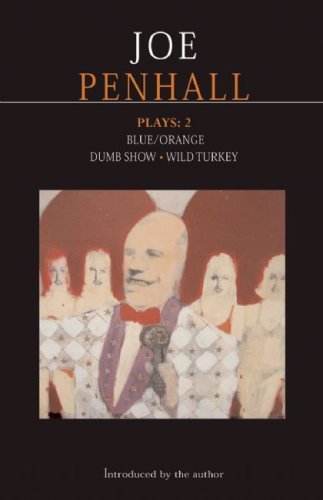
Plays: 2 (Blue/Orange, Dumb Show, Wild Turkey), Joe Penhall

I chose a speech from Penhall’s Blue/Orange for my monologue “portfolio” when auditioning for drama schools, but that was the only play of his I had ever read. The first two plays in the volume are particularly notable for their scathing critique of complacency in modern society; Blue/Orange deals with psychosis and its treatment in the NHS, and Dumb Show is a detailed examination of our obsession with celebrity. Both these plays are sharp, resonant and very funny. Wild Turkey, a much earlier play, does stand out as a more juvenile piece, very much in the vein of early 90s “in-yer-face” theatre, but is an entertaining read all the same.

Knives in Hens, Kill the Old Torture Their Young and The Chrysalids, David Harrower

David Harrower is brilliant. I love his work, and I have done ever since seeing the London premier of his play Blackbird with Roger Allam and Jodhi May back in 2005. After co-directing a production with a fellow fan of the play with my university drama society, I decided to dip into some of his other plays and was not disappointed. His work is as diverse as it is dark, disturbing, intelligent and thought-provoking. Knives in Hens and Kill the Old Torture Their Young are at opposite ends of the spectrum, with threads linking the two works. The former suggests a remote time in a rural community, the latter set in a modern city in modern-day Britain. Knives in Hens contains a brutal and shocking murder; Kill the Old Torture Their Young provides a panoramic, almost scientific view of a world lost within itself. Yet both present recognisable realities despite their nondescript nature. Both plays’ characters are lost, lonely and groping for connection with anything and anyone around them, in a way which is both absurd and hugely sympathetic. The Chrysalids, an adaptation of one of John Wyndham’s less popular novels, is the only play I didn’t enjoy, purely on the basis of the difficulty of the adaptation. The story is not very theatrical, and the characters are not as fully developed or believable. Nevertheless, Harrower is highly recommended reading and I hope more of his plays are produced on the fringe circuit.

Glengarry Glen Ross, David Mamet

I’ve already stated how much I love the film adaptation of this play, and it was only a matter of time before I got down to reading the original text. I won’t go into too much detail, but unsurprisingly, I loved it. The language is fast, sharp, cruel and highly distasteful, thus a fairly accurate depiction of the brutality of a Chicago Real Estate office. Read the play, see the play, and/or see the film. However you can access the work, access it!


The Oresteia, Aeschylus

The birth of Western Theatre, they say, lies with Aeschylus and the Greeks. Not strictly true, since The Oresteia is the only full exemplar of many extracts of Greek drama from the earliest recorded period of civilisation, but there is a case to be made for theatre to have existed as long as humanity has. Debating aside, the plays are a decent read in the only bombastic, hugely theatrical way that Greek drama can be. Unless you’re desperate to build up a personal collection of the canon, it is probably better to get a copy from the local library rather than buy one.


Doctor Faustus, Christopher Marlowe

Marlowe is brilliant, Full Stop. I would say that, though, since I spent the last year of my degree reading and writing about his work. For a man who (possibly) only wrote seven plays in his short lifetime, what a hell of a dramatic legacy to leave behind. A contemporary of Shakespeare, if allowed to live there is little academic doubt that he would have gone on to rival and possibly even eclipse the Bard. His account of the famed Germanic legend is seen to be the magnum opus, Marlowe’s Hamlet, if you will, but I prefer Edward II. Nevertheless, a good bit of reading for the sake of the wonderful language, and the sheer volume of blasphemy, heresy and general devilish irreverence. The scene in which Faustus insults and beats up the Pope and his Cardinals must be one of the funniest in English Renaissance drama.

The Country Wife, William Wycherley

Raunchy Restoration Drama has been given a bad name by being branded nothing more than cheap comedy of the Carry On type, but I beg to differ. It will forever have a place in my heart, and this classic is a prime example of why. A convoluted plot, involving a man who pretends to be impotent in order to discreetly cuckold as many men as possible, is twisted even further with jibes at social mores and manners of the age. No-one is safe from satirising, from the pompous judges and gentleman to the common fops and fools. In fact, the only people who come off well are those who out-hypocrite the hypocrites. In a time when wit and artifice where the order of the day, it is no wonder its theatre was so richly injected with it. Let’s not forget that women have a lot to thank Restoration theatre for, too, since it was the first time they were allowed to perform publicly on stage. Anyway, I like the Carry On films, so stick that in your chimney and stoke it!

The Actor and the Target, Declan Donnellan

Now that I’m in training to be a professional actor, the time has come for me to read theoretical works on the art of acting. I have nothing but praise for Donnellan, as this is a practical way of dealing with actor’s block – one of the most terrifying experiences for an actor when in rehearsal. Donnellan’s thirty years of experience as a successful and acclaimed director and theatre practitioner are drawn on as a means of confronting what the author calls “the spider’s legs”: the eight questions an actor will ask when feeling blocked, all of which feature the word “I”. Donnellan deftly isolates the actor’s ego and offers a system of debunking it in order to fully explore the scope of a character. This book has been an essential tool for me this early on in my professional training and I’d recommend it to any actors at any stage of their lives.

Respect for Acting, Uta Hagen

Similarly, this thirty-year-old classic is just as useful as Donnellan’s. Packed full with exercises, tips and advice, the book is a surprisingly concise read and left me eager to re-read it, taking notes and searching out a means to work on some of Hagen’s suggestions. Despite its age, the issues the book deals with are universal, as are the exercises offered. Not all of them are necessarily helpful all of the time, but Hagen suggests this as a series of isolated exercises which can form part of the actor’s invisible arsenal when working on a role, and perhaps this is what makes it so digestible and motivating. Also highly recommended to actors.

The Year of the King, Antony Sher

Anyone even remotely interested in the process of acting ought to dip into this book. A near-precise reproduction of diary entries, the book charts the author’s journey from discussing playing Shakespeare’s Richard III with the RSC artistic directors through to the opening night of the now-classic 1984 production. Sher contemplates a variety of approaches to the character, and muses on its wider relevance, as well as reproducing a good few anecdotes. I’m pretty certain any non-actors merely intrigued by the theatre will find this enjoyable and very charming.


Other People’s Shoes, Harriet Walter

Probably the most touching and intelligent account I’ve read so far, this book serves as memoir, opinion piece and suggestions for the actor and actress in the professional world. Walter writes honestly, without any pomposity, and considers the changes in the world and on the stage with a curiosity and cleverness which resonated very strongly with me. Most satisfying is that she refuses to make the book any kind of self-congratulatory list of achievements, despite her highly impressive CV. I’m only vaguely familiar with her acting work, but I’m keen to follow and watch her from now on.

Prose Fiction
As for novels, I’ve had less time and energy to spend immersing myself in literature, but I’ve had a fair few good reads.

The Turn of the Screw, Henry James

I finally had the chance to read this classic, thrilling novella. I’m not much of a fan of James’ work for being overlong and incredibly boring, but this is precisely the opposite, and serves in some way to justify his title as “the master of Victorian prose”. Atmospheric, evocative, engrossing and terrifying, the story centres around a governess who thinks her young charges are possessed by spirits. Deftly playing with ideas about truth and fiction, and the reliability of narrators and reported events, James creates a world of uncertainty, in which anything is possible, and therefore somewhat believable. I loved it.

The Midwich Cuckoos, John Wyndham

I remember seeing the 1995 remake of the 60s film adaptation when I was just a little boy, and got hold of a copy of the book a few years ago. With the summer free of university reading obligations, I devoured this novel in one week. Although written in a sort of stuffy, suitably 1950s vernacular, the pace is so fast you barely have time to take a breath, while the plot concerns itself with a typically sleepy and isolated village invaded in a most peculiar way which gives new meaning to the phrase “long game”. It’s an interesting novel with some insights into Soviet-era paranoia, as the military become involved in the activities of the village. Classic British sci-fi.

The Swimming-Pool Library, Alan Hollinghurst

It was about time I read Hollinghurst. Hailed as the UK’s premier gay novelist, this first novel, written in 1988, bluntly and explicitly addresses the experiences of privileged white gay men throughout the twentieth century with all its consequences. The protagonist, William Beckwith, presents the reader with contemporary gay London, while his friendship with Lord Charles Nantwich shows how the path to Beckwith’s liberal lifestyle was littered with pain and pleasure in equal measure. It is no wonder Hollinghurst has so successfully crossed the border from niche to mainstream; what is astonishing is how uncompromising his writing is, and I’m keen to read his later works, too.
Related Posts Plugin for WordPress, Blogger...