What's in a name?

My photo
London, United Kingdom
I speak, I listen, I read, I write, I act, I play, I debate, I discuss, I fool, I smile and I sulk.

Tuesday, 21 December 2010

I Have Been Reading...

Despite having virtually zero online presence over the last four months, I have been present: a state which I never really understood until recently. While horribly busy and inundated with tasks both creative and vital to survival, I’ve stolen moments to myself for books, and looking back, I’ve managed to clock up quite a few literary miles. Here are some edited highlights.

Theatre
Obviously, I’ve been reading plays and books on theatre like crazy. For me, this has been the most productive period of reading on the field of theatre.

Five Plays (Ivanov, The Seagull, Uncle Vanya, Three Sisters, The Cherry Orchard), Anton Chekhov

I didn’t enjoy Chekhov when studying Three Sisters for A-level drama. He was boring, and nothing happened. Now I’m older with a little more experience of life, I now realise that that’s pretty much the case with most human experience in Western Culture. As obvious as it may seem to repeat here, it is still true to say that Chekhov has a brilliant way of exploring relationships between family members, friends and lovers. The range of human emotions and psychology – either expressed or repressed – are all there in a variety of manifestations. Anyone even remotely interested in the trajectory of modern Western theatre ought to at least dip into these plays. I particularly recommend Uncle Vanya and Three Sisters, but I’ve always preferred tragedy.
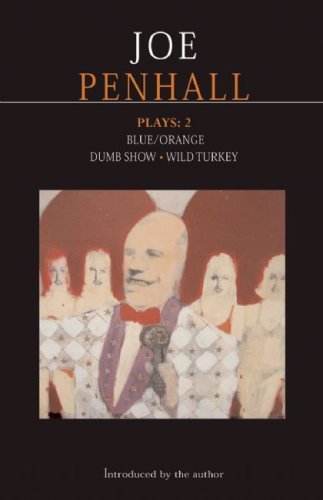
Plays: 2 (Blue/Orange, Dumb Show, Wild Turkey), Joe Penhall

I chose a speech from Penhall’s Blue/Orange for my monologue “portfolio” when auditioning for drama schools, but that was the only play of his I had ever read. The first two plays in the volume are particularly notable for their scathing critique of complacency in modern society; Blue/Orange deals with psychosis and its treatment in the NHS, and Dumb Show is a detailed examination of our obsession with celebrity. Both these plays are sharp, resonant and very funny. Wild Turkey, a much earlier play, does stand out as a more juvenile piece, very much in the vein of early 90s “in-yer-face” theatre, but is an entertaining read all the same.

Knives in Hens, Kill the Old Torture Their Young and The Chrysalids, David Harrower

David Harrower is brilliant. I love his work, and I have done ever since seeing the London premier of his play Blackbird with Roger Allam and Jodhi May back in 2005. After co-directing a production with a fellow fan of the play with my university drama society, I decided to dip into some of his other plays and was not disappointed. His work is as diverse as it is dark, disturbing, intelligent and thought-provoking. Knives in Hens and Kill the Old Torture Their Young are at opposite ends of the spectrum, with threads linking the two works. The former suggests a remote time in a rural community, the latter set in a modern city in modern-day Britain. Knives in Hens contains a brutal and shocking murder; Kill the Old Torture Their Young provides a panoramic, almost scientific view of a world lost within itself. Yet both present recognisable realities despite their nondescript nature. Both plays’ characters are lost, lonely and groping for connection with anything and anyone around them, in a way which is both absurd and hugely sympathetic. The Chrysalids, an adaptation of one of John Wyndham’s less popular novels, is the only play I didn’t enjoy, purely on the basis of the difficulty of the adaptation. The story is not very theatrical, and the characters are not as fully developed or believable. Nevertheless, Harrower is highly recommended reading and I hope more of his plays are produced on the fringe circuit.

Glengarry Glen Ross, David Mamet

I’ve already stated how much I love the film adaptation of this play, and it was only a matter of time before I got down to reading the original text. I won’t go into too much detail, but unsurprisingly, I loved it. The language is fast, sharp, cruel and highly distasteful, thus a fairly accurate depiction of the brutality of a Chicago Real Estate office. Read the play, see the play, and/or see the film. However you can access the work, access it!


The Oresteia, Aeschylus

The birth of Western Theatre, they say, lies with Aeschylus and the Greeks. Not strictly true, since The Oresteia is the only full exemplar of many extracts of Greek drama from the earliest recorded period of civilisation, but there is a case to be made for theatre to have existed as long as humanity has. Debating aside, the plays are a decent read in the only bombastic, hugely theatrical way that Greek drama can be. Unless you’re desperate to build up a personal collection of the canon, it is probably better to get a copy from the local library rather than buy one.


Doctor Faustus, Christopher Marlowe

Marlowe is brilliant, Full Stop. I would say that, though, since I spent the last year of my degree reading and writing about his work. For a man who (possibly) only wrote seven plays in his short lifetime, what a hell of a dramatic legacy to leave behind. A contemporary of Shakespeare, if allowed to live there is little academic doubt that he would have gone on to rival and possibly even eclipse the Bard. His account of the famed Germanic legend is seen to be the magnum opus, Marlowe’s Hamlet, if you will, but I prefer Edward II. Nevertheless, a good bit of reading for the sake of the wonderful language, and the sheer volume of blasphemy, heresy and general devilish irreverence. The scene in which Faustus insults and beats up the Pope and his Cardinals must be one of the funniest in English Renaissance drama.

The Country Wife, William Wycherley

Raunchy Restoration Drama has been given a bad name by being branded nothing more than cheap comedy of the Carry On type, but I beg to differ. It will forever have a place in my heart, and this classic is a prime example of why. A convoluted plot, involving a man who pretends to be impotent in order to discreetly cuckold as many men as possible, is twisted even further with jibes at social mores and manners of the age. No-one is safe from satirising, from the pompous judges and gentleman to the common fops and fools. In fact, the only people who come off well are those who out-hypocrite the hypocrites. In a time when wit and artifice where the order of the day, it is no wonder its theatre was so richly injected with it. Let’s not forget that women have a lot to thank Restoration theatre for, too, since it was the first time they were allowed to perform publicly on stage. Anyway, I like the Carry On films, so stick that in your chimney and stoke it!

The Actor and the Target, Declan Donnellan

Now that I’m in training to be a professional actor, the time has come for me to read theoretical works on the art of acting. I have nothing but praise for Donnellan, as this is a practical way of dealing with actor’s block – one of the most terrifying experiences for an actor when in rehearsal. Donnellan’s thirty years of experience as a successful and acclaimed director and theatre practitioner are drawn on as a means of confronting what the author calls “the spider’s legs”: the eight questions an actor will ask when feeling blocked, all of which feature the word “I”. Donnellan deftly isolates the actor’s ego and offers a system of debunking it in order to fully explore the scope of a character. This book has been an essential tool for me this early on in my professional training and I’d recommend it to any actors at any stage of their lives.

Respect for Acting, Uta Hagen

Similarly, this thirty-year-old classic is just as useful as Donnellan’s. Packed full with exercises, tips and advice, the book is a surprisingly concise read and left me eager to re-read it, taking notes and searching out a means to work on some of Hagen’s suggestions. Despite its age, the issues the book deals with are universal, as are the exercises offered. Not all of them are necessarily helpful all of the time, but Hagen suggests this as a series of isolated exercises which can form part of the actor’s invisible arsenal when working on a role, and perhaps this is what makes it so digestible and motivating. Also highly recommended to actors.

The Year of the King, Antony Sher

Anyone even remotely interested in the process of acting ought to dip into this book. A near-precise reproduction of diary entries, the book charts the author’s journey from discussing playing Shakespeare’s Richard III with the RSC artistic directors through to the opening night of the now-classic 1984 production. Sher contemplates a variety of approaches to the character, and muses on its wider relevance, as well as reproducing a good few anecdotes. I’m pretty certain any non-actors merely intrigued by the theatre will find this enjoyable and very charming.


Other People’s Shoes, Harriet Walter

Probably the most touching and intelligent account I’ve read so far, this book serves as memoir, opinion piece and suggestions for the actor and actress in the professional world. Walter writes honestly, without any pomposity, and considers the changes in the world and on the stage with a curiosity and cleverness which resonated very strongly with me. Most satisfying is that she refuses to make the book any kind of self-congratulatory list of achievements, despite her highly impressive CV. I’m only vaguely familiar with her acting work, but I’m keen to follow and watch her from now on.

Prose Fiction
As for novels, I’ve had less time and energy to spend immersing myself in literature, but I’ve had a fair few good reads.

The Turn of the Screw, Henry James

I finally had the chance to read this classic, thrilling novella. I’m not much of a fan of James’ work for being overlong and incredibly boring, but this is precisely the opposite, and serves in some way to justify his title as “the master of Victorian prose”. Atmospheric, evocative, engrossing and terrifying, the story centres around a governess who thinks her young charges are possessed by spirits. Deftly playing with ideas about truth and fiction, and the reliability of narrators and reported events, James creates a world of uncertainty, in which anything is possible, and therefore somewhat believable. I loved it.

The Midwich Cuckoos, John Wyndham

I remember seeing the 1995 remake of the 60s film adaptation when I was just a little boy, and got hold of a copy of the book a few years ago. With the summer free of university reading obligations, I devoured this novel in one week. Although written in a sort of stuffy, suitably 1950s vernacular, the pace is so fast you barely have time to take a breath, while the plot concerns itself with a typically sleepy and isolated village invaded in a most peculiar way which gives new meaning to the phrase “long game”. It’s an interesting novel with some insights into Soviet-era paranoia, as the military become involved in the activities of the village. Classic British sci-fi.

The Swimming-Pool Library, Alan Hollinghurst

It was about time I read Hollinghurst. Hailed as the UK’s premier gay novelist, this first novel, written in 1988, bluntly and explicitly addresses the experiences of privileged white gay men throughout the twentieth century with all its consequences. The protagonist, William Beckwith, presents the reader with contemporary gay London, while his friendship with Lord Charles Nantwich shows how the path to Beckwith’s liberal lifestyle was littered with pain and pleasure in equal measure. It is no wonder Hollinghurst has so successfully crossed the border from niche to mainstream; what is astonishing is how uncompromising his writing is, and I’m keen to read his later works, too.

Sunday, 19 December 2010

What Do You Mean You Haven't Seen...?!

In Bruges
(2009; Dir. and Screenplay Martin McDonagh)

Ever since 2003, when I saw the original production of The Pillowman on stage at the National Theatre, I have been a fan of Martin McDonagh's work. I had known about his first feature film, In Bruges, about a year before eventually seeing it. All I knew was that it had Colin Farrell, Brendan Gleeson and Ralph Fiennes in it: a cast which seemed intriguing not least for the very different kinds of actor I had thought of each of them to be.

Although the supporting cast is excellent – I’ve never seen a film in which I’ve laughed out loud to lines spoken by American dwarves and fat Belgians – the three principals are simply superb in their own charming ways. Farrell is surprisingly charming as the ingénue hit man (now there’s a juxtaposition), and Gleeson is wonderfully stoic as his older and more world-weary partner; but the award for sheer absurd fearsomeness goes undisputedly to Ralph Fiennes as Harry, a lyrical, witty, yet totally psychotic gang boss who turns up halfway through the story when his plan goes awry.

With the exception of Ben Kingsley’s turn as Don in Sexy Beast with Ray Winstone, I have never seen such a dangerous display of barely-controlled fury in a character in recent British film. Interestingly, both Fiennes and Kingsley are key names in that group of British actors who have made it in Hollywood for their ability to play calm, intelligent and above all philanthropic men on screen, specifically for such roles as Count László de Almássy in The English Patient and Mahatma Ghandi in Ghandi. These two actors are known and respected for such roles. However, true to their craft, they have stretched their ranges and challenged their audience’s expectations by playing loveable but ultimately nasty characters.

In Fiennes’ case, Harry is pretty much despicable. Nonetheless, he is so wonderfully petty and ridiculous that we feel safe laughing at him as an audience, even though one might consider it foolish to even look the character in the eye if encountering him in real life. And that is where the marriage of good character-based writing and acting works so well. McDonagh, known for his jet black, incisive humour, provides Fiennes with a fully-fledged psychopath who has no compunctions towards killing for a living, but will demand other characters not to insult his children and refuses to kill a friend even though the latter has disobeyed his orders (having said that, he does shoot his friend in the foot as opposed to the head, since he can’t let him get off completely).

The script in general is filled with witty one-liners, responses, exchanges and short monologues which tap deep into the darker recesses of humour. The characters solemnly discuss philosophy before embarking on acts of brutal violence in a manner which could so easily be clichéd were it not for McDonagh’s deft manipulation of the Irish and cockney speech rhythms and lyricism (no real surprise, since McDonagh grew up in London to Irish parents). I use the word manipulation precisely because the language is able to con its audience into a false sense of security with the simple suggestion that Irish people are just as capable as anyone else of violence, murder and brutality irrespective of the cheerful and harmless stereotype often portrayed in American movies.

Equally surprising is just how beautifully shot the film is, painting Bruges as grey and dull by day, conforming to Farrell’s character’s vision of the city, but coming alive with colour and warmth at night. The use of Belgian, Canadian and American actors is also effective, giving the film a feel of literally being on a touristic break while bumping into people of other nationalities along the way.

Funny, frightening and philosophical, this is the perfect film for anyone who wants to sit back and watch a decent story played out with relish and excitement. I can’t recommend In Bruges highly enough.

Tuesday, 14 December 2010

Who Is The Greatest?

The Features Editor of The Stage has gone mad. Either that or the team was so desperate to drum up interest in the publication that they sank to the depths of lowest common denominator journalism, launching a ten-part series called - I kid you not - "The Greatest Stage Actor". An attempt to discover "the greatest theatre performer (male or female) of all time", this seemed to me to be an incredibly vacuous and wholly ridiculous waste of time and energy. Narrowing down the list to ten performers chosen by "a selection of industry experts", the public was asked to vote for who it believed to be worthy of such a prestigious honour over ten weeks, each entry being supported by a statement from an academic, journalist or other enlightened individual.

Firstly, can anyone define what criteria would be suitable for the term "greatest stage actor"? Of course, a certain amount of technical prowess coupled with performative truth ought to be enough, but anything beyond that would delve straight into the realm of personal preference. Even then, anyone with a good knowledge of the British theatre industry and its heritage would be hard pressed to narrow it down to just ten people.

Unsurprisingly, the majority of the choices were old (or dead) white men. Despite the winner being Dame Judi Dench, she was one of three female options, all aged over 60; and the youngest contender was Mark Rylance, aged 50. Also, they were all to be British, yet another display of cultural arrogance which buys into the “British actors are the best in the world” jingoism which I admittedly engage in before reminding myself that France has several national theatre companies and Germany fully subsidises over 2000 regional theatre companies.

Ah well, it’s a good thing The Stage is only really good for reviews and job adverts.

In Their Own Words

Many people, including some working actors, [...] may admire the fact that an actor has a trained voice and body, but they believe that any further training can come only from actually performing before an audience. I find this akin to the sink-or-swim method of introducing a child to water. Children do drown and not all actors develop by their mere physical presence on stage. A talented young pianist, skilful at improvisation or playing by ear, might be a temporary sensation in a night club or on television, but he knows better than to attempt a Beethoven piano concerto. The pianist’s fingers just won’t make it. A pop singer with an untrained voice may have a similar success, but not with a Bach cantata. The singer would rip his vocal chords. An untrained dancer has no hope of performing in Giselle. The dancer would tear tendons. In their attempt the will also ruin the concerto, the cantata, and Giselle because, if they eventually are ready, they will only remember their early mistakes. But a young actor will unthinkingly plunge into Hamlet if he has a chance. He must learn that, until he’s ready, he is doing the same destructive thing to himself and the role.

Uta Hagen, German-American Actress, Director and Coach, 1919 – 2004

Boom and Bust

At the beginning of last week British broadcaster James Naughtie mistakenly rechristened Culture Secretary Jeremy Hunt. I’m sure your imagination is fertile enough to imagine which word was substituted in place of the cabinet minister’s surname, but just in case you haven’t worked it out the slip up has been recorded and reproduced here for posterity.

The problem with having a surname like Hunt, as well as being a member of a Tory government affecting the largest public spending cuts since the post-war period is that this mistake was bound to be made at some point. After all, the Culture Secretary’s name has been a source of new rhyming slang in the arts world for months, ever since the Public Spending Review in October. In these difficult financial times it is understandable that the government would shave spending in order to claw out of the huge debt the country has found itself in, and cuts to arts spending were expected. The debate on whether this is a good or bad decision is not for here. What interests me is the effect rather than the causes of the decisions.

A lot has happened in British Theatre over the last thirteen years. When New Labour came into power at the end of the 20th century, a so-called "centre-left progressive agenda" (no, I don't know what that is either) was put into the heart of governmental policy. This included, as anything even remotely liberal always does, increasing funding for Culture and the Arts. Time will only tell how deeply the theatre industry will be affected by the cuts, but of one thing you can be sure: regional theatres, theatre companies and the country will suffer.
Anyone reading this might think “well of course you would think that: your main interest is the theatre”. True, but I wouldn’t balk at the economic returns of the theatre in the UK. The West End alone amasses £85 billon each year in revenue (which is roughly the same amount that the banks owe us, by the way). This is primarily because of the reputation of British Theatre at home and abroad. Tourists and locals alike still flock to the theatre in spite of other forms of entertainment and the rising cost of living. Despite the recession, I am reliably informed that the Royal National Theatre has never been so financially healthy: a larger repertoire including more new plays alongside revivals and new productions of old “classics” has attracted a wider range of audiences, while War Horse, which has been running for four years and counting, is the most successful production in the National’s history. That’s all very well and good, but one can’t ignore the fact that more and more of the funding for this has come from commercial sources. It is no longer an oddity to see “Such-and-such a Business is the Proud Sponsor of Such-and-such a Production at the National Theatre”. There is even an entire summer season of plays running annually in the Olivier theatre named after its sponsor, Travelex. The truth is that the cheapest and most accessible theatre tickets are made available only through private investment in a theatre company which professes to belong to the nation and which receives the largest government subsidy in the country! If this is the case, what of the smaller theatrical ventures out there?

A couple of years ago, when the Arts Council announced cuts to grants and funding for smaller theatre groups and companies in the regions, there was outrage within the theatre world. Now, with a virtually non-existent repertory system, the fear is that there will be less opportunity for those who don’t happen to live in London or any of the larger UK cities to see quality productions, thus placing more pressure on those companies with the money and reputation to be able go on tour to provide something worth spending on. This effectively means a lot more investment in “safer”, crowd-pulling options such as Shakespeare and a lot less experimentation in new writing or alternative forms of theatre such as physical and collaborative theatre. All this means there will be far fewer opportunities for the ever-growing numbers of professional actors who come out of the drama schools each year.


Only last summer, the online media was crowing about a “boom” in employment opportunities for black actors: Ruined, Joe Allen Has Come and Gone, Welcome to Thebes, Eurydice, and a few other productions overlapping in various theatres in London all meant that there was work for the black actors and the British public were welcoming it. With the exception of modern takes on classical works, where will the opportunities be next summer? It might be a good time for me as a young black actor in training at one of the best drama schools in the world, but what about when I graduate? Who can say? I’m not naïve: I expect periods of unemployment; but it would be nice to not have to be waiting tables for the entirety of the financial year.

Of course, the theatre is not the only performing art at threat, nor are the arts the most endangered species belonging to the country: education, defence, health, and anything else which has ever received taxpayers’ money is at threat, but perhaps the government ought to consider why it is so vitally important to contribute to the wedding of Prince William and Kate Middleton when they are making cuts to so many longer-term aspects of the day-to-day lives of this country’s citizens. And if you happen to switch on the television, radio, or enjoy a night out in the next few years and notice a dip in the quality, just think what might be the reasons for that.
Related Posts Plugin for WordPress, Blogger...